The Practice
I build infrastructure that carries aliveness like a vessel.
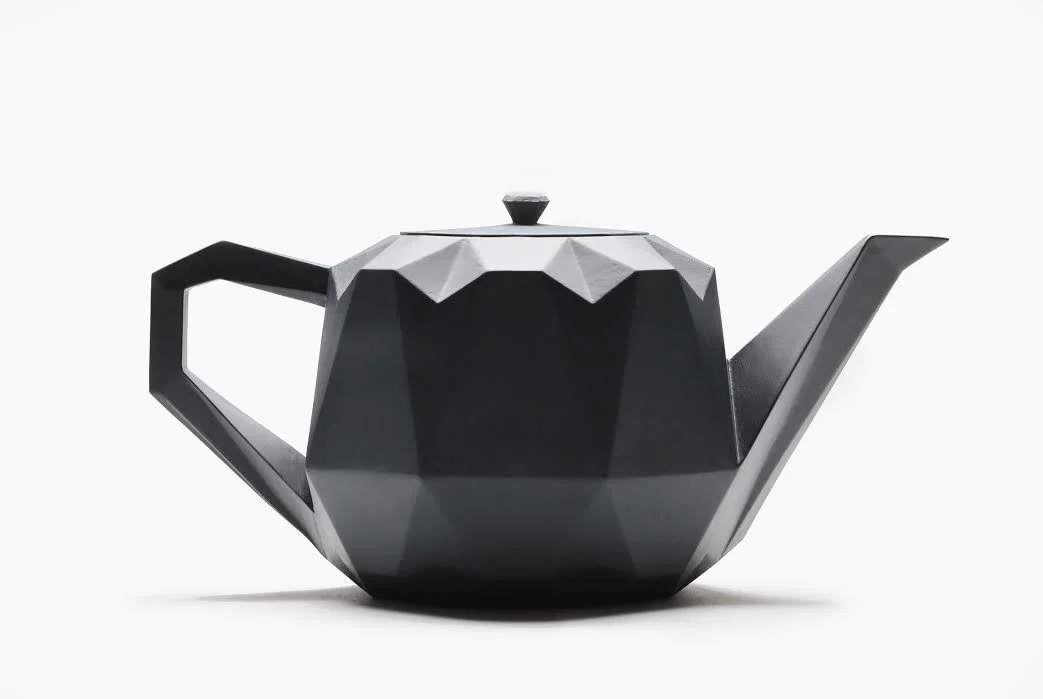
Bre & Co. Teapot 2017
I’m connecting the dots of my past projects to discover the threads that run through my life. A classroom is a vessel. So is a puppet, a howto video, a hackerspace, a 3D printer on a desk, a magazine, a machine that holds a pen. I've built all of these, and the job was always the same: make the vessel honestly, invite people in, and get out of the way.
I studied mythology and performing arts at The Evergreen State College, and spent years inside butoh, dancing with Doranne Crable. Butoh taught me to be present in my body. If you practice a form long enough, slow enough, a self shows up in the room. The form isn't the opposite of aliveness. The form is what makes aliveness visible.
Then I found puppetry, which is the same lesson turned inside out. A puppeteer creates a world, the characters as puppets, the places as theatrical sets. A puppet is a machine for carrying life. I built animatronics in London and Los Angeles at Jim Henson’s Creature Shop, working on Pinocchio and Buddy feature films. In Seattle I ran the house at the Northwest Puppet Center, and started my own tiny company, the Little Chicken Theater. Puppetry is where I learned that you can construct a vessel made of wood, foam, fabric, or a mechanism and something genuinely alive will move through it if you build it honestly and operate it with intention. This idea weaves through my endeavors. The idea of starting with an idea and intention and exploring the pathway that opens. Building infrastructure that carries aliveness.
I taught in Seattle public schools. As a K-8 generalist I taught art in middle school, music and drama and dance in elementary. A classroom is a vessel too. You don't make the kids creative; you build the conditions and get out of the way. I was doing this during the era of No Child Left Behind, which was a national project to standardize teaching to tests and move focus away from individual empowerment. By giving students as many ways of expressing themselves as possible, I taught from an understanding that we learn who we are by expressing ourselves. This was counter-culture, so I learned the lesson partly by fighting for it.
Teaching didn't make enough money to own a car and I wanted to have a family, so I was creating artistic side hustles while teaching. From drawing, painting, photography and video, I explored different mediums trying to find my footing. Eventually I made howto videos for my students and started publishing them to the internet at just the moment that became possible, before YouTube, and became the first howto video blogger in a cohort of pioneering video bloggers. That led to becoming a professional video blogger, making howto videos at Make: and Etsy in the earliest days of video blogging — weekly demonstrations of how to make things, before that was a genre. A howto is infrastructure for permission: it says you can do this too, and then proves it and hopefully inspires you to do it your own way. Around the same time, I co-wrote the Cult of Done Manifesto, which documented the lifestyle of making something new every week, the same permission compressed into thirteen lines. Infrastructure doesn't have to be heavy and can be playful.
I led the cofounding of NYCResistor, a hackerspace in Brooklyn. I co-founded MakerBot to put a factory on every desk, and Thingiverse so the things people designed could flow between them. Later I built Bold Machines, a studio whose whole job was pointing serious machines at artists doing rad things, and Bre & Co., a workshop for making meaningful objects meant to be given away. Some of these grew enormous and some of them ended. All of them were the same idea: build infrastructure for creative expression. Build the vessel, invite the aliveness, support what moves through. Build infrastructure that carries aliveness.
My current venture that will be a platform for the rest of my life is Bantam Tools in Peekskill New York. At Bantam Tools we make exceptional computer controlled machines for innovators. First CNC mills, now drawing machines, painting machines, and handwriting machines. A drawing machine is a machine that holds a pen. Bantam Tools publishes my magazine, Machine Arts. Bantam Tools runs PlotterFiles.com so machine artists have a commons for their work; and we have the Bantam Tools Machine Arts Gallery next to the Peekskill Coffee house so the work has a room to be seen in. I think of the machine making company, magazine, art collection, gallery together under the umbrella of Bantam Tools as one instrument, and I am learning to play it. I get to go to work in a beautiful place with deep community roots and work with smart people, exploring the frontier and making things exist that explore and connect and haven’t happened before.
Threads run through all of it. Community as an artform. One example is The Affirmative Club, a meeting format Eric Skiff and I built where only affirmative feedback is allowed, published as a zine so anyone can start their own. That thread continues in Peekskill today: PeekskillArt.com, a website exploring the city's public art, and a project in process with community partners to create wayfinding for Peekskill's touchpoints on the Underground Railroad.
Another thread is portraiture as witness. Years ago I made the I Love You Project: I sat people down, had them close their eyes, and asked them to say I love you over and over until the words dissolved and the person appeared. I've been thinking about that project for twenty years. It's been waiting patiently for its machines, and the machines are here now.
I've been called a founder, a CEO, a maker, a teacher, a puppeteer. Those were all true, and they were all the same job. I build the infrastructure that life moves through. I expect to find my best work ahead of me.