Machines have been the through-line of my work: tools that translate digital ideas into physical 3D objects, circuits, drawings and paintings. Some began as improvised experiments; others were more intentional products. My goals have been to take processes and industrial machines that are hard and big and expensive and work with great teams to make them smaller, more accessible, affordable and empowering. What happens when creativity is unlocked by a machine accessible enough for other people to make it their own?

I'm not a trained engineer, I am a maker and a gatherer of smart, clever people who like to get things done. There are many ways of creating machines, but my colleagues and I have pioneered a hacker-style of product development that utilizes trial and error over a "specification brief" approach. Here are some machines I had a hand in making.
The Machines
Make: Drawbot 2006
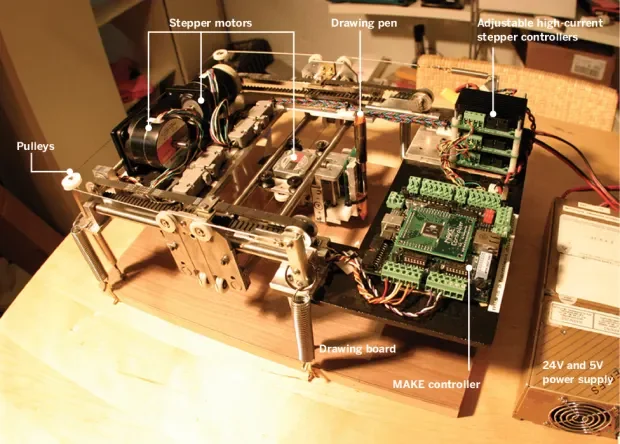
Vienna RepStrapThe Make: DrawBot was the first drawing machine I built, around 2006, with friends at Hackerbot Labs. Built around the pre-Arduino MAKE Controller and repurposed motion hardware, it took a photograph of a person, reduced the image to areas of light and shadow, traced the outlines, and filled the shadows with a pen. It existed because I was fascinated by machines that perform drawings in real time—the spectacle of watching the image emerge was as important as the finished portrait. Published in Make: Magazine, DrawBot established the art-machine thread that still runs through my work.
Vienna RepStrap 2007
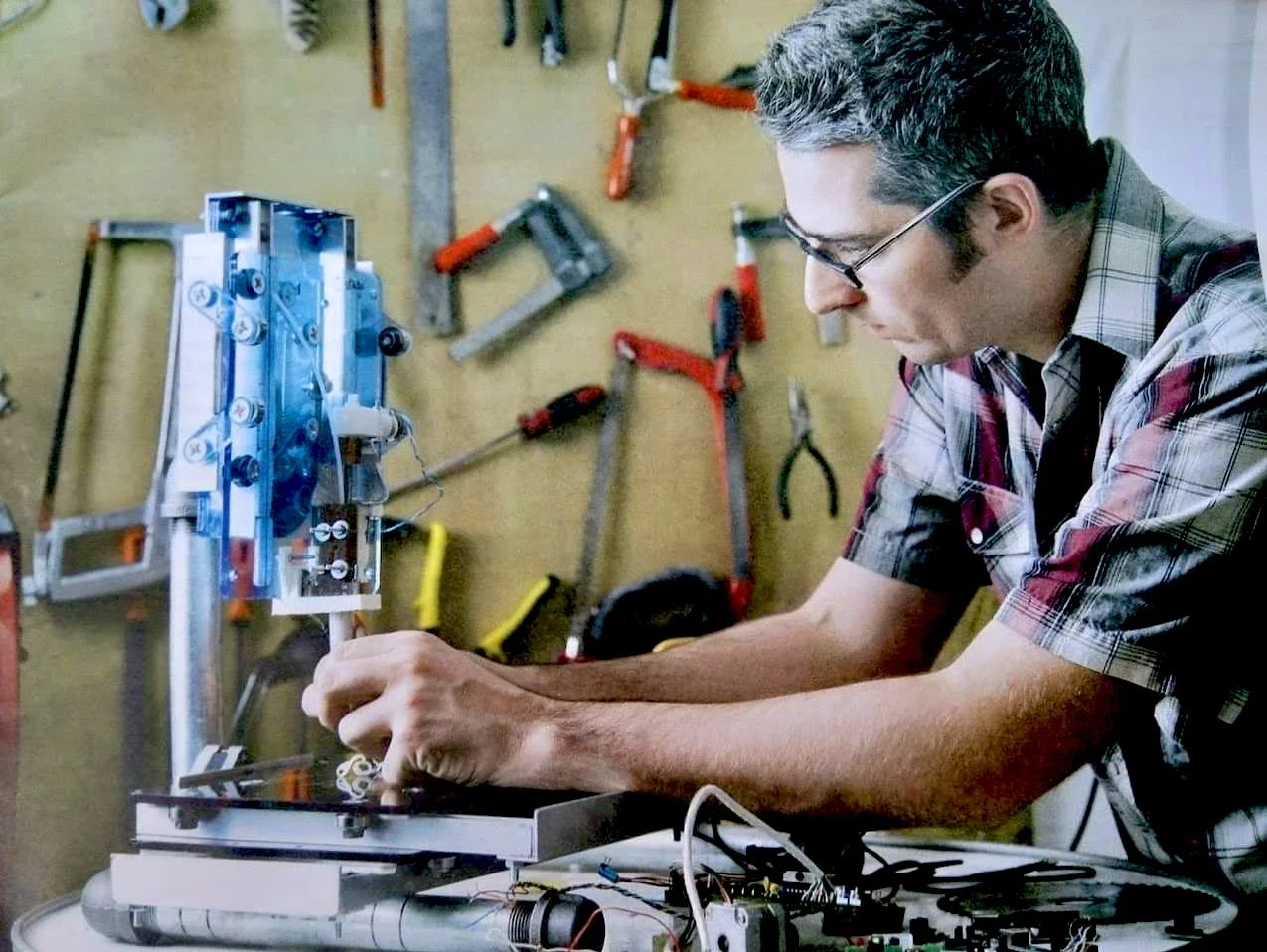
In the autumn of 2007, while I was an artist-in-residence with monochrom in Vienna, I assembled my first 3D printer. It was a RepStrap: a machine built from conventional parts as a practical stand-in for a RepRap capable of printing some of its own components. My immediate ambition was to make a robot that could print shot glasses for Roboexotica. The machine was crude and not yet reliable, but it made personal fabrication feel real to me. I left it in Vienna, where local hackers later got it running more dependably. That machine was one of the sparks that eventually led toward MakerBot.

MakerBot Cupcake CNC 2009
Cupcake CNC was the first MakerBot. We designed it in early 2009 around laser-cut plywood, off-the-shelf components, and technology developed by the RepRap community, with a straightforward priority: create the least expensive 3D-printer kit that ordinary people could assemble and successfully use. The first prototype worked on March 13, 2009. I took it to SXSW and printed shot glasses throughout the event, and the first batch of twenty kits sold out in two weeks. The MakerBot Cupcake CNC helped move 3D printing out of industrial laboratories and onto the desks of makers, designers, educators, and small communities. At the time, a low cost 3D printer was around $60k and our kit was under $1k.
MakerBot Thing-O-Matic 2010
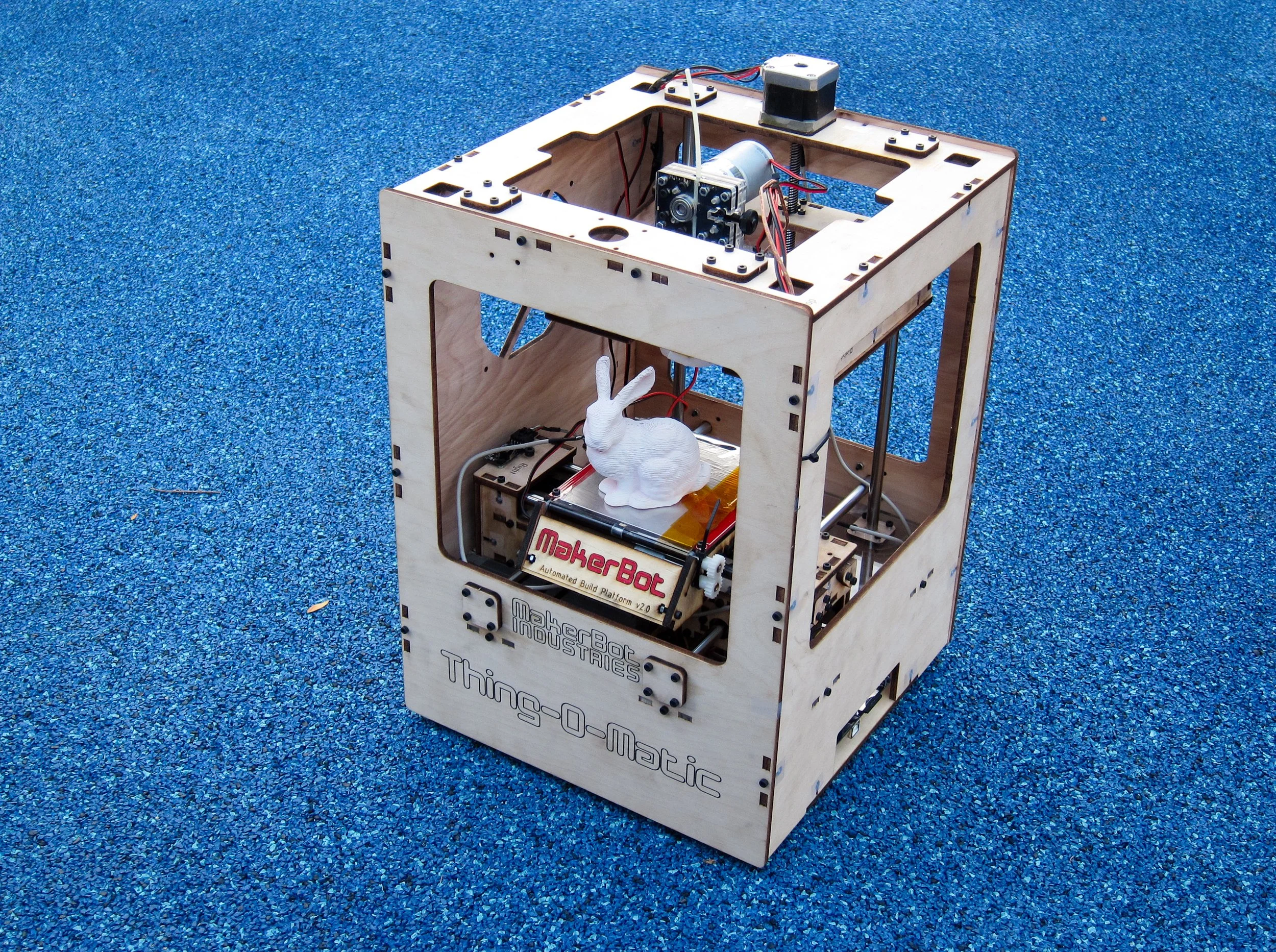
Thing-O-Matic was our response to everything the Cupcake community had taught us. Introduced at World Maker Faire New York in 2010, it incorporated many popular upgrades into a larger, more automated, still-open machine. Its Automated Build Platform used a conveyor belt to eject a completed object and begin another, making unattended batches possible. Thing-O-Matic marked the moment MakerBot began moving from an intriguing kit toward a practical personal manufacturing tool, and it helped carry desktop 3D printing into schools, design studios, hackerspaces, and popular culture.
The MakerBot Unicorn Pen Plotter 2011
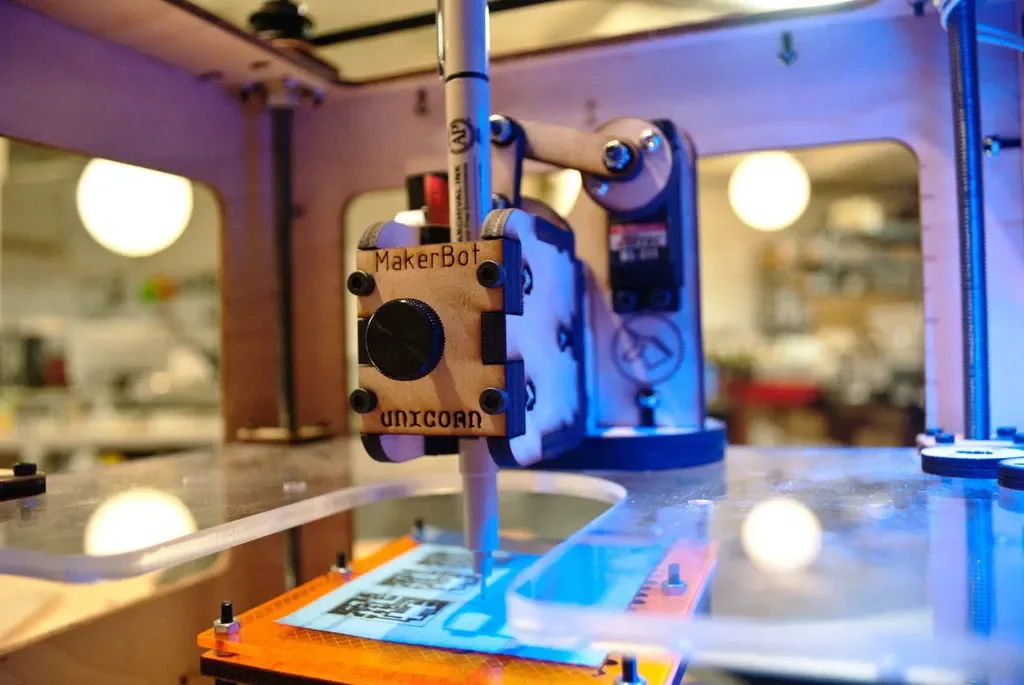
The Unicorn Pen Plotter attachment replaced the Thing-O-Matic’s plastic extruder with a pen, transforming the 3D printer into a drawing machine. Designed by Will Langford, it was one of MakerBot’s earliest accessories and an early demonstration that a digital-fabrication platform could make marks as well as plastic objects. In retrospect, the Unicorn feels like a direct ancestor of my eventual return to drawing and painting machines.
MakerBot Replicator 2012
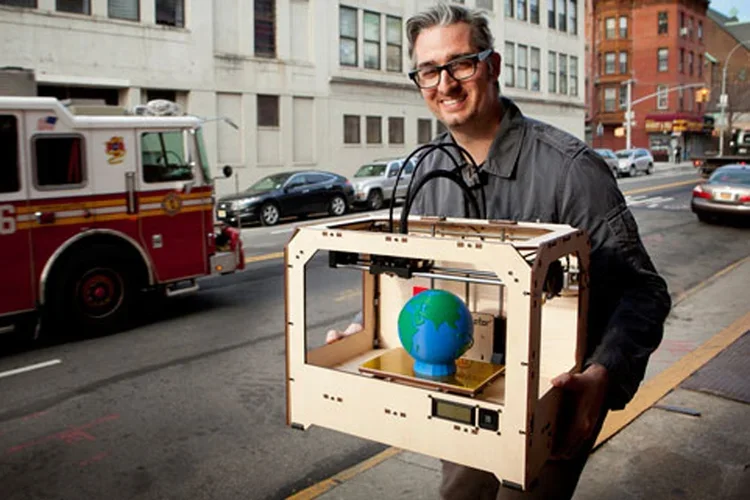
The original Replicator, launched at CES in January 2012, was designed to make a MakerBot feel ready to work as soon as it came out of the box. It more than doubled the Thing-O-Matic’s build capacity, added an onboard screen and controls, and offered dual extrusion for two-color and experimental multi-material printing. This product that completed our transition from kit-building culture to a fully assembled desktop machine while retaining much of the experimental spirit. The development of this product was absurdly quick because another project had been delayed.
MakerBot Replicator 2 2013
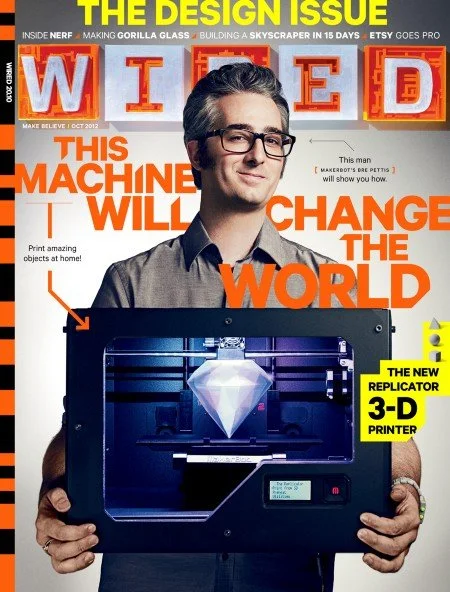
Replicator 2 was created to move desktop 3D printing from the hackerspace and workshop into professional studios, offices, classrooms, and retail environments. Introduced in September 2012, it paired a refined steel-and-powder-coated design with a larger build volume, PLA printing, MakerWare software, and layers as fine as 100 microns. It became the visual icon of the first consumer 3D-printing boom, appearing on the cover of WIRED, while the Replicator line was recognized by Time as one of the best inventions of 2012.
I loved making this machine and having it in the world. MakerBot was on fire, the team was the best in the world, and we were rocking.
This is also the first machine where we went deep on branding and building out brand maps that were aimed at a larger target market. The messaging, alongside a product that was truly ready for consumers was a home run.
MakerBot Digitizer Desktop 3D Scanner 2013
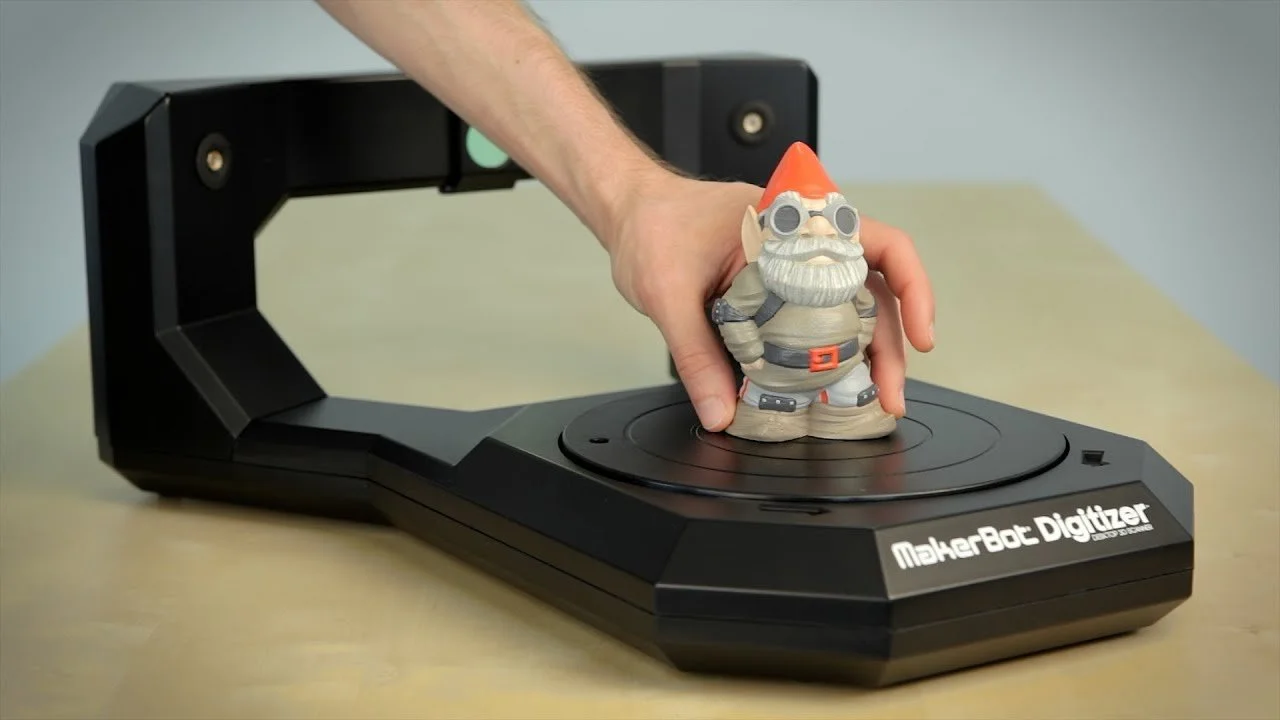
The MakerBot Digitizer existed to remove another obstacle: not everyone begins with a CAD model. Announced at SXSW in 2013, it used a rotating platform, a camera, and two lasers to turn a physical object into an STL or MakerBot file in roughly twelve minutes. It created an understandable loop—scan, edit, share, and print—and brought desktop 3D scanning into the same approachable ecosystem as the Replicator. Its milestone was making the capture of physical forms feel less like industrial metrology and more like using an ordinary desktop creative tool.
This was one of my favorite products to develop ever. It was so user friendly and so unique, but it never took off as a product. Product development always comes with risk. Despite seemingly everyone telling us to make a 3D scanner because using CAD is hard, very few people bought it.
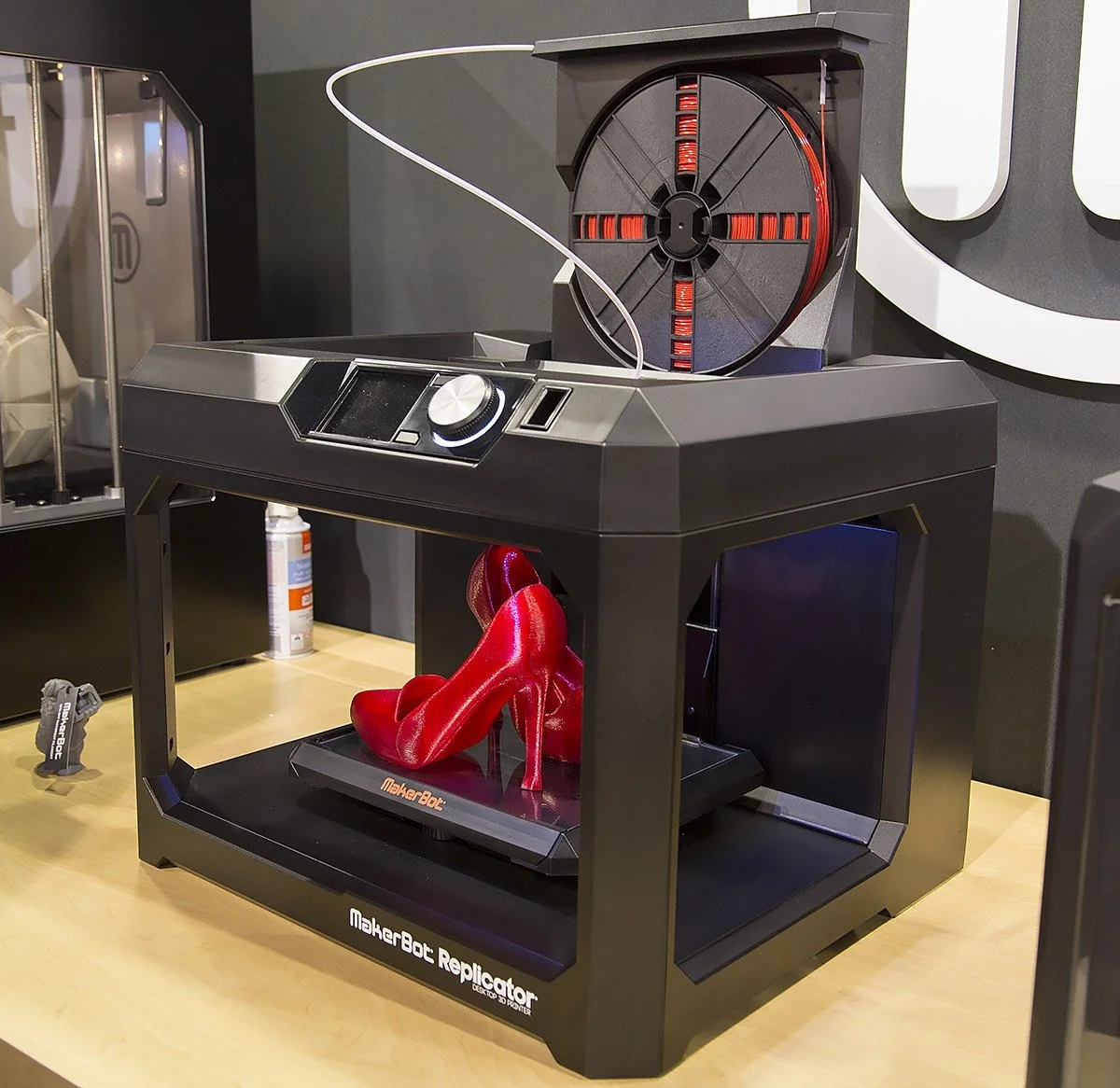
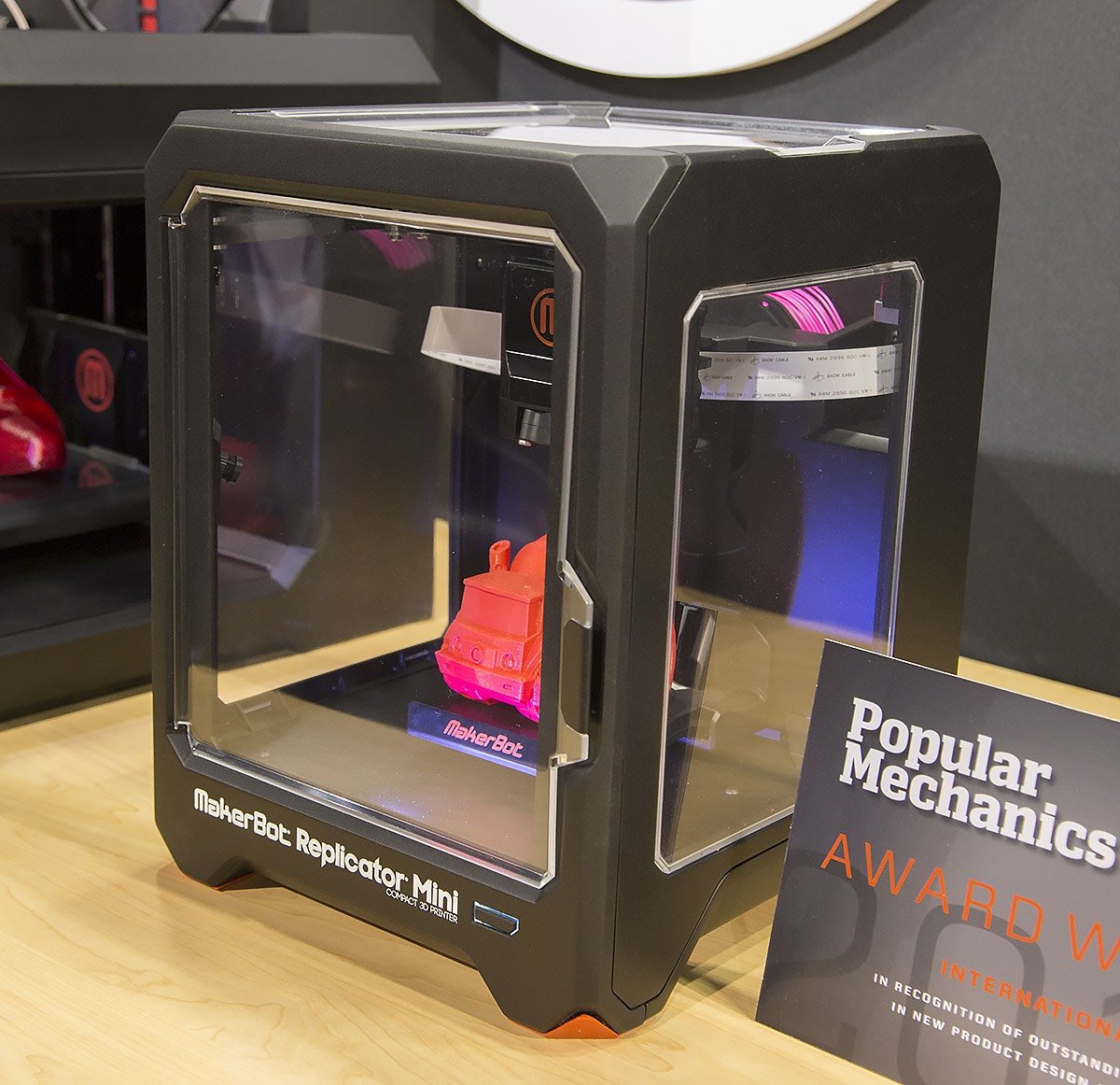
The Fifth-Generation MakerBot Replicators 2014
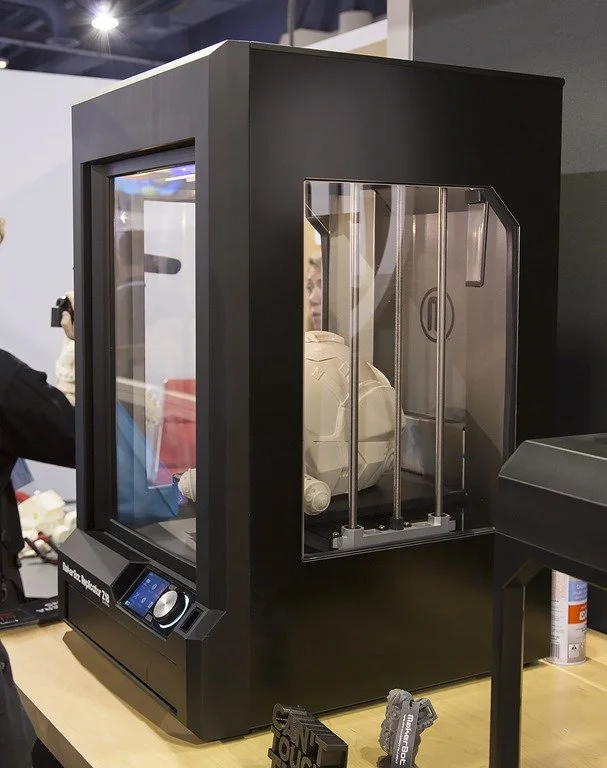
The fifth-generation Replicator, Replicator Mini, and Replicator Z18 were our attempt to turn a single printer into a connected platform serving different kinds of users. Announced at CES in January 2014, the family ranged from a compact, one-touch machine to a large-format printer capable of producing objects eighteen inches tall. The machines shared cameras, color displays, Wi-Fi connectivity, cloud libraries, mobile applications, and the Smart Extruder. The series marked MakerBot’s most ambitious effort to make 3D printing behave like a modern consumer appliance and a scalable software-and-hardware ecosystem. It also demonstrated just how difficult that standard is to achieve with an emerging technology. In many ways, it was ahead of it’s time, it was running a full computer in there, connected to your thingiverse account, and had a camera to take pictures of the process. We filed dozens of patents in 2013 to keep up with the technology we were inventing.
This was also launched about half a year after MakerBot was acquired by Stratasys so there was that whole transition happening at the same time. Wild times. You can see the amount of brute force effort went into making this happen in the products and in the coverage of CES in 2014.
Between the acquisition and this epic lineup of products, 2013 was one of the most stressful and powerful years of my life so far.
Most of our inventions for the 5th generation MakerBot can be found in the Bambu Labs line of 3D printers.
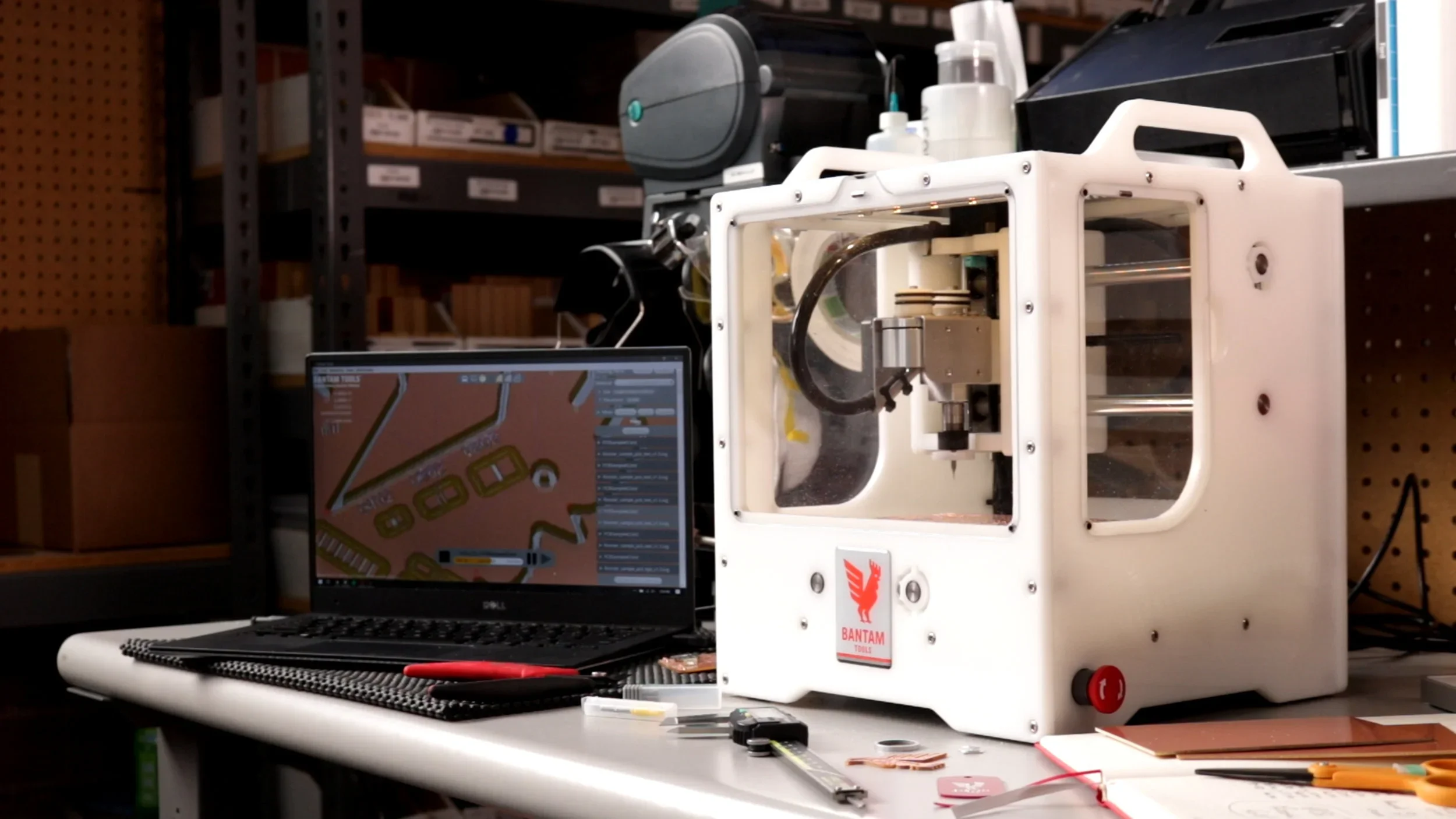
Bantam Tools Desktop PCB Milling Machine 2017
The Bantam Tools Desktop PCB Milling Machine grew out of the Othermill, a 2013 project originally intended to reinvent shop class with a compact, precise CNC machine. After I acquired Other Machine Company in 2017, we concentrated the machine around a clear professional purpose: allowing electrical engineers to mill one- and two-sided circuit boards at their desks rather than waiting days or weeks for outsourced prototypes. Its milestone was collapsing hardware-development cycles. Engineers could design, mill, populate, test, and revise a circuit board in the same day, making hardware development behave a little more like software development.
One of the reasons we moved on to creating a more capable CNC machine is because folks were using this teeny machine to do actual milling of components. Despite being out of production for many years,
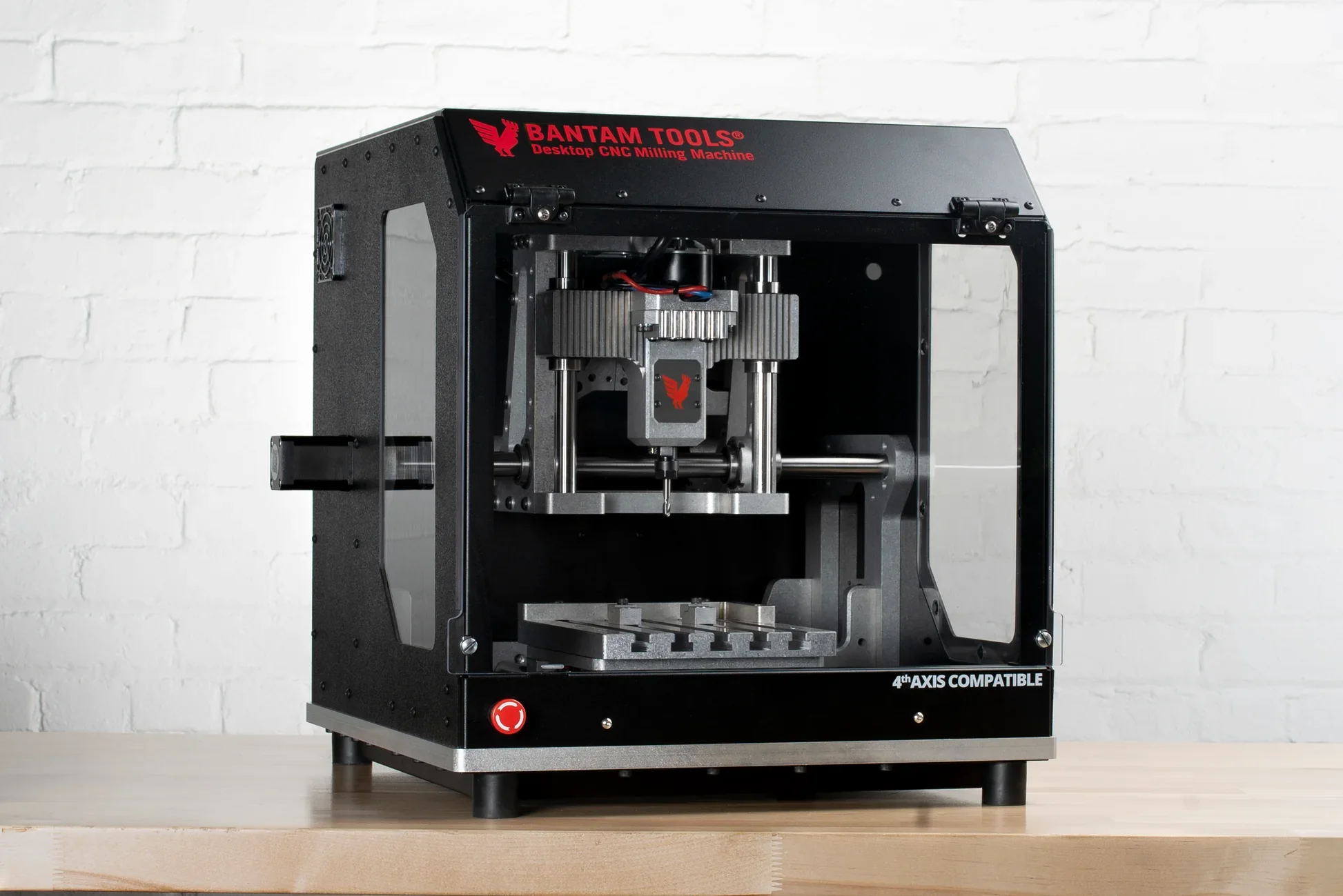
Bantam Tools Desktop CNC Milling Machine 2020
The Bantam Tools Desktop CNC Milling Machine expanded that idea beyond circuit boards. Launched in July 2020, it was built to bring precision aluminum prototyping into laboratories, classrooms, and product-development teams without requiring a full-size machine shop. Its enclosed construction, high-speed spindle, approachable control software, Fusion 360 integration, and simplified toolpath workflows helped people with limited machining experience produce real metal parts. It marked our move from a specialized electronics tool to a broader desktop manufacturing platform capable of teaching machining skills and shortening the path from an idea to a functional prototype.
This machine was used as a prop in the Wakanda workshop in the Black Panther 2 film.
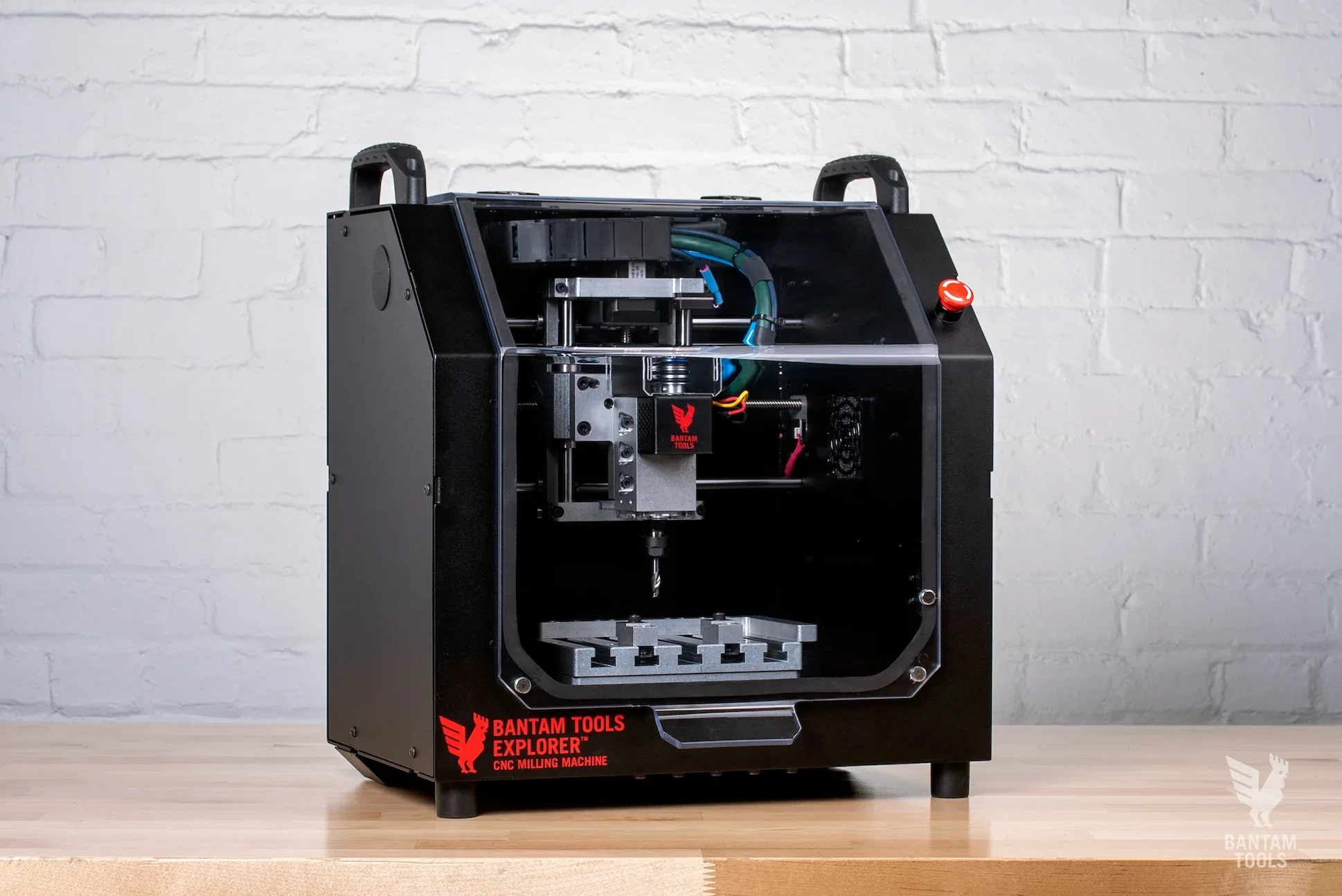
Bantam Tools Explorer CNC Milling Machine 2022
The Explorer combines the portability people loved about the Desktop PCB Milling Machine with the metal-cutting capability of the larger Desktop CNC. Introduced at IMTS in September 2022, it weighed only 42 pounds, included built-in carrying handles, and was compact enough to travel in an optional Pelican case and operate from external battery power. With a 23,000 RPM spindle, quarter-inch tooling, and the ability to machine aluminum and other prototyping materials, it was designed to make professional-quality parts close to where they were needed—in an office, classroom, laboratory, workshop, or out in the field. Its milestone for Bantam Tools was demonstrating that a capable enclosed CNC mill did not have to remain permanently installed in a machine shop.
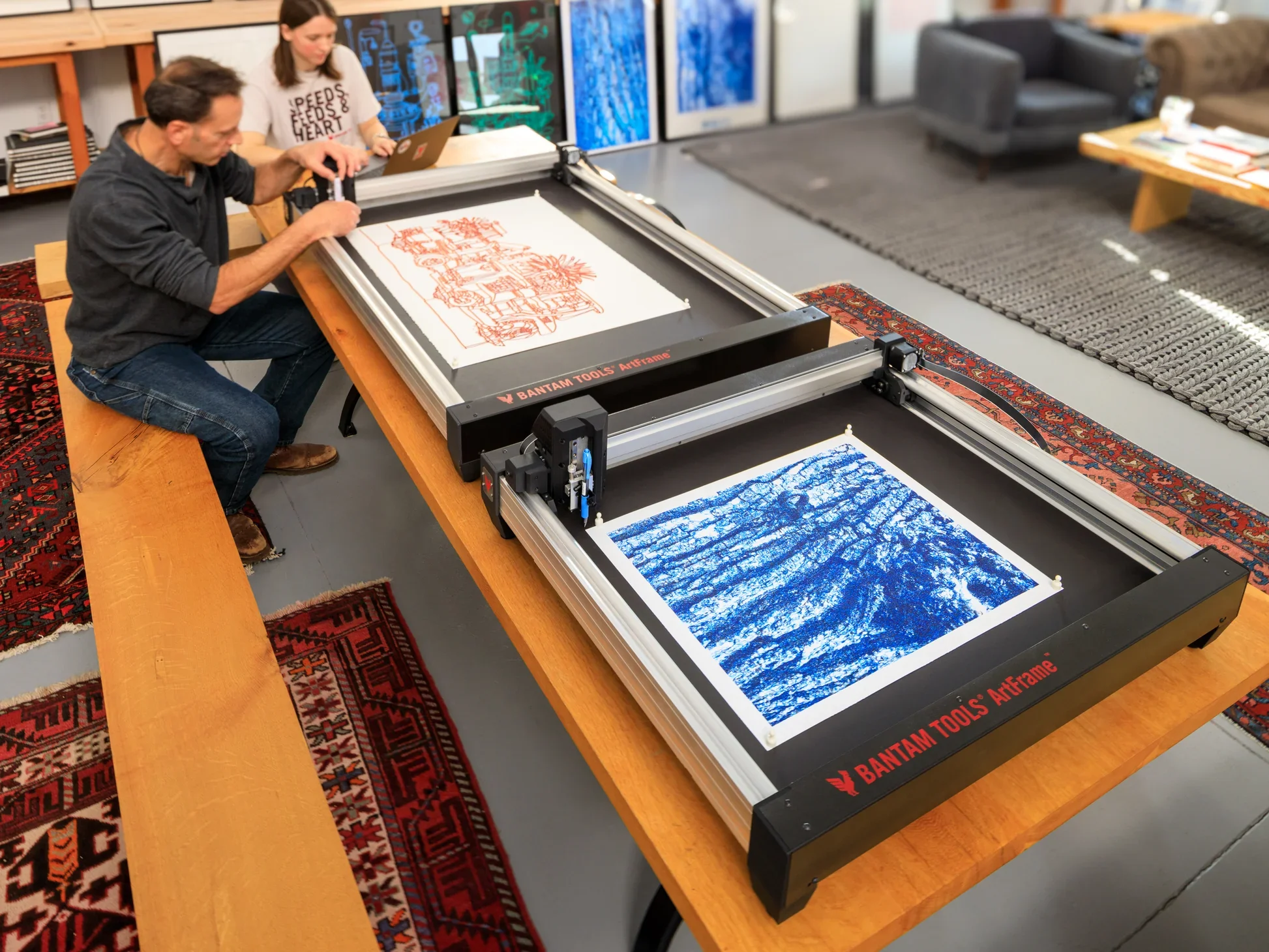
Bantam Tools ArtFrame 2024
ArtFrame began as an exhibition instrument. We designed the first prototypes to draw work generated by Harold Cohen’s AARON for the Whitney Museum of American Art’s 2024 retrospective. Two machines operated at the museum for four months and produced thousands of drawings. The commercial system launched in November 2024, giving professional artists a large, quiet, extensible machine for turning digital instructions into physical works made with pens, brushes, charcoal, pastels, oil sticks, paper, and canvas. Its milestone is connecting foundational artificial-intelligence art, museum presentation, and the materials and gestures of a traditional studio.
The Bantam Tools ArtFrame comes in 3 sizes to accomodate drawings of 18×24”, 24×36” and 24×72”.
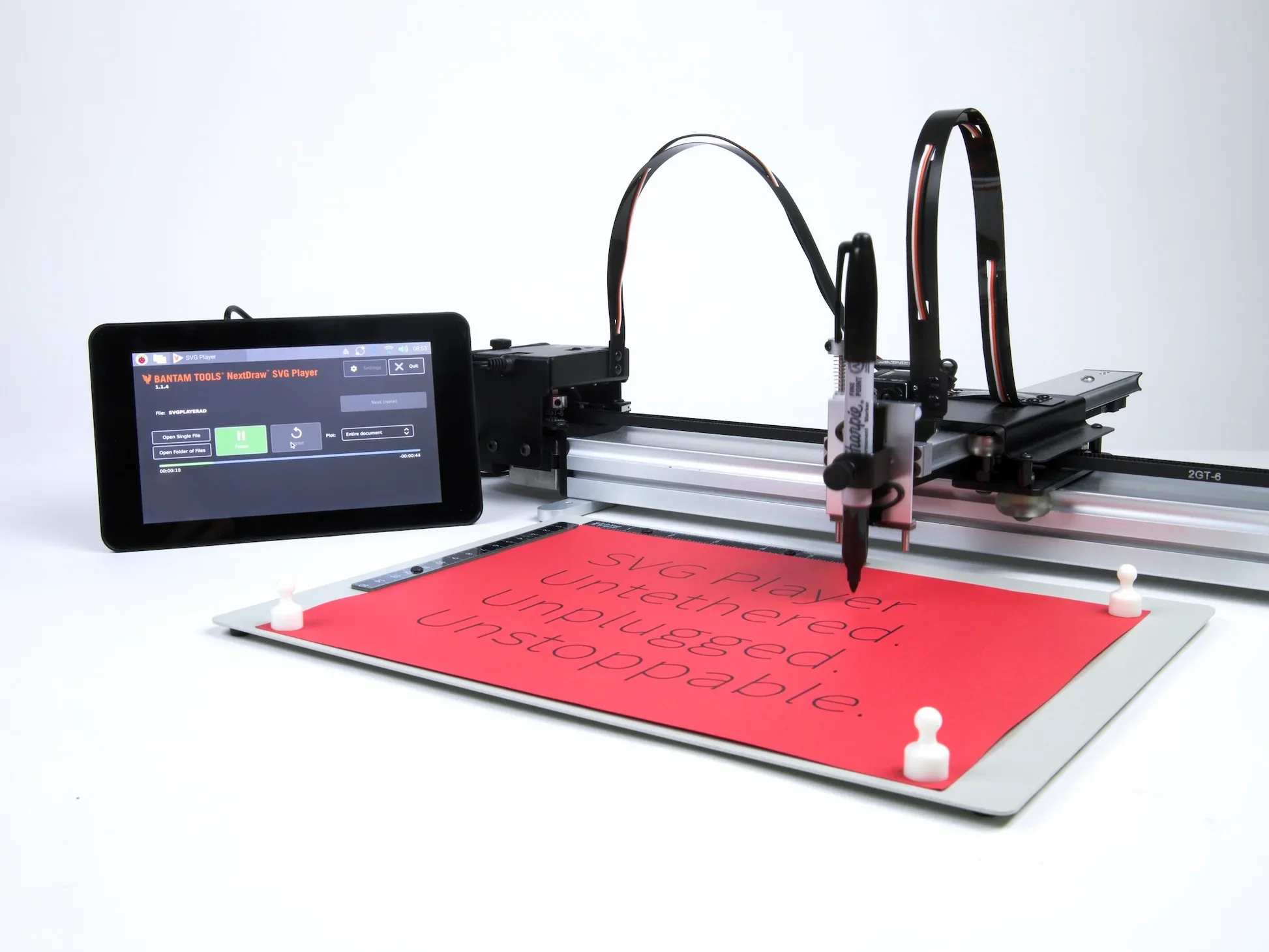
Bantam Tools NextDraw 2024
NextDraw began after Bantam Tools acquired Evil Mad Scientist in January 2024. We wanted to carry the proven AxiDraw lineage forward as a faster and more robust family of writing and drawing machines. Launched that April in three sizes, NextDraw introduced new motion firmware, a brushless pen-lift mechanism, automatic homing, smoother high-speed plotting, and professional manufacturing and support from Peekskill, New York. Its milestone is one of continuity: preserving a much-loved creative-tool tradition while giving artists, educators, researchers, and handwriting users a modern and dependable platform.
The Bantam Tools NextDraw comes in 3 sizes for 8.5×11” paper, 11×17” paper, and 22×34” paper. Buy now!
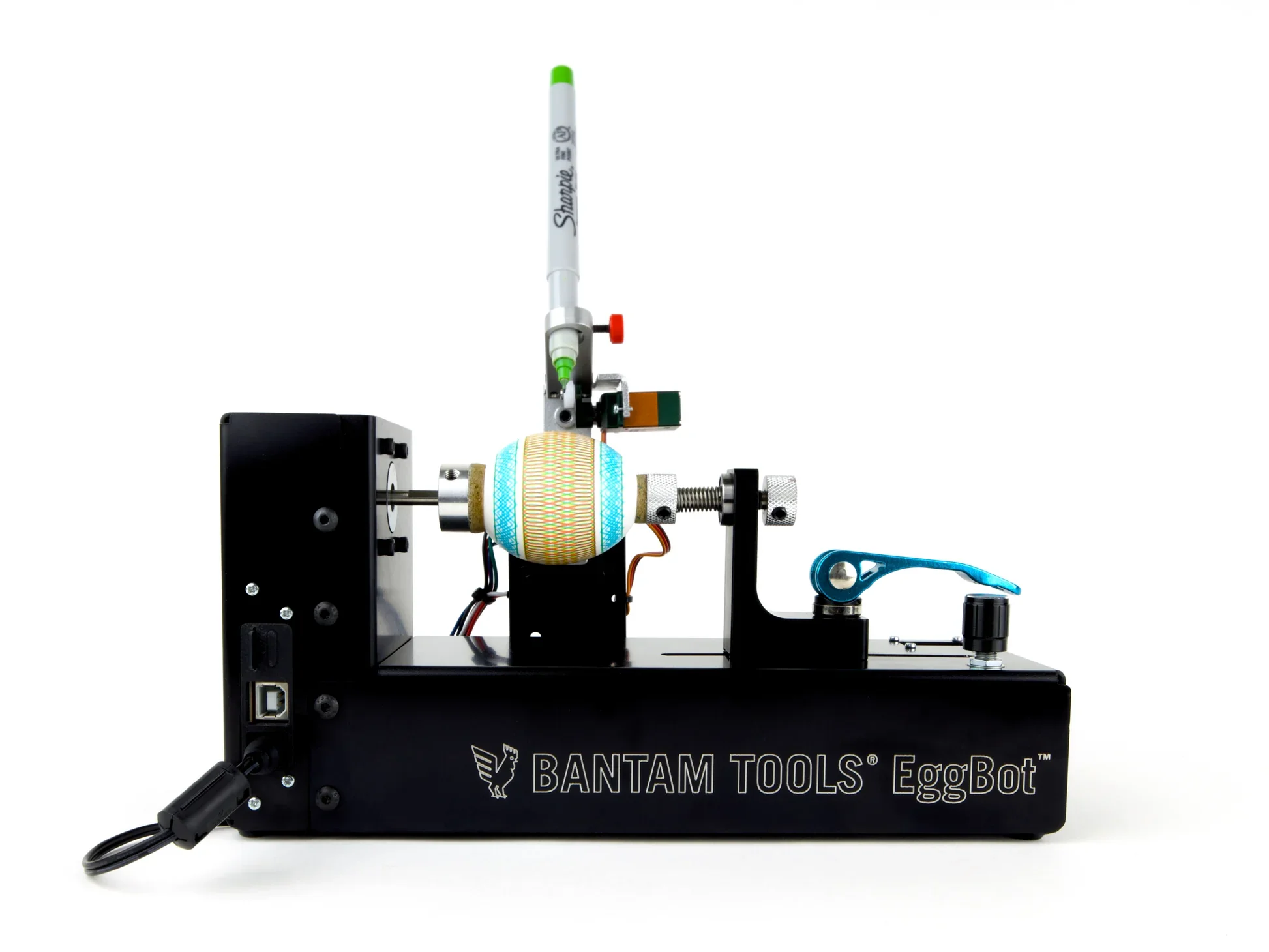
Bantam Tools EggBot 2025
EggBot belongs to a lineage longer than most personal-fabrication machines. Motion-control artist Bruce Shapiro, father of the EggBot, created the original EggBot in 1990, and Evil Mad Scientist later developed the concept into a widely used kit for drawing on eggs, ornaments, and other curved objects. After Evil Mad Scientist joined Bantam Tools, we rebuilt the platform with contemporary electronics, software, and standalone operation; the Bantam Tools EggBot Ornament Edition launched in October 2025. Its milestone is longevity: a simple and delightful art robot that has introduced generations of families, students, artists, and makers to motion control.
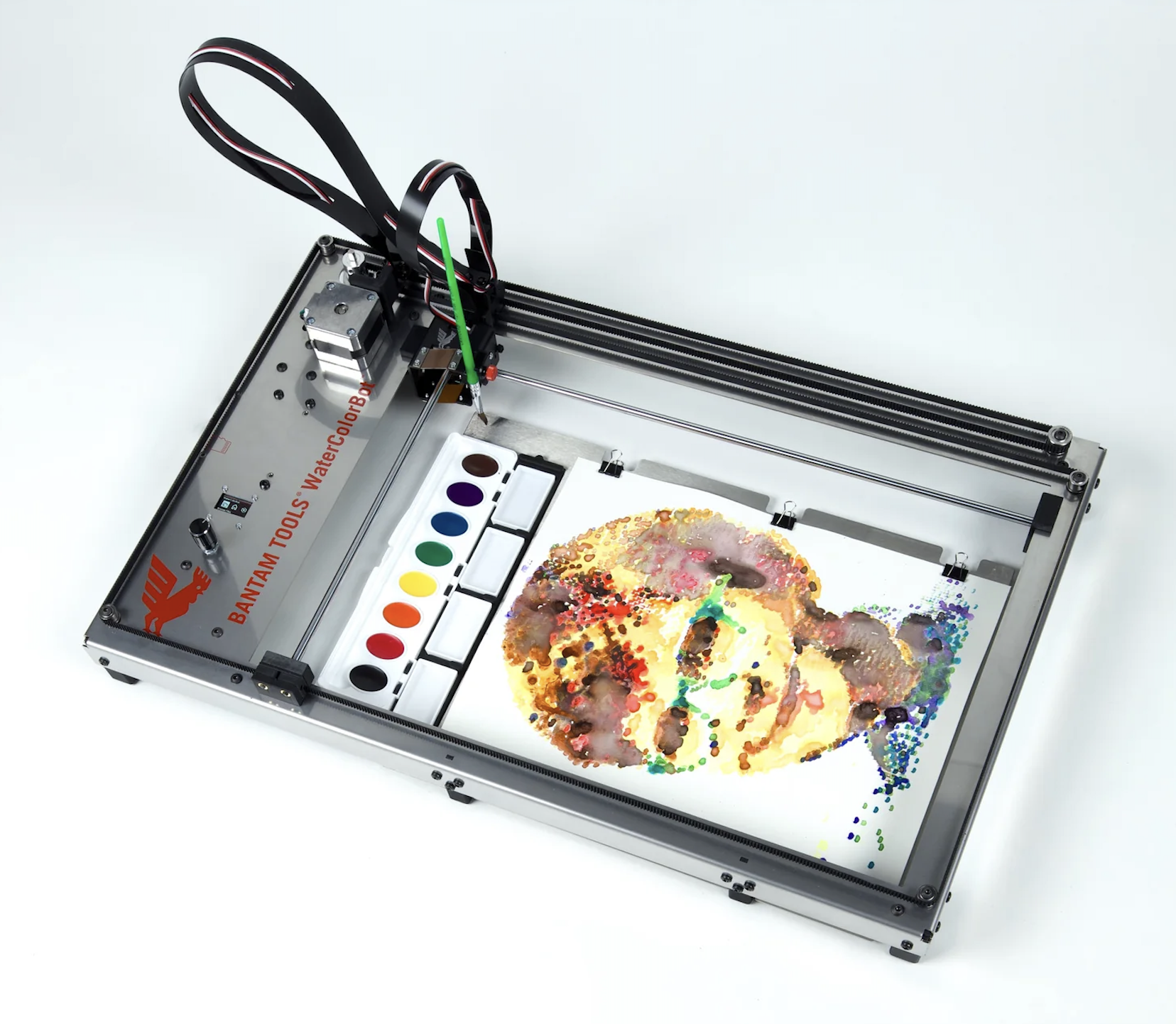
Bantam Tools WaterColorBot 2026
WaterColorBot began in 2013 as Super Awesome Sylvia’s painting robot, developed with James and Zeph Todd and Evil Mad Scientist for RoboGames. Its Etch A Sketch–inspired mechanism made robotic painting with real brushes, water, and pigment approachable. The project launched on Kickstarter and was demonstrated at a White House science event. Bantam Tools introduced a completely reengineered edition in January 2026 with standalone controls, Bantam Tools Studio, and image-processing software. It reconnects accessible educational robotics with a more capable machine-painting workflow for artists, families, schools, and studios.